
SNAP — the Supplemental Nutrition Assistance Program, formerly known as food stamps — is the largest federal nutrition assistance program in the United States, providing monthly food benefits to approximately 42 million Americans. Yet surveys consistently find that millions of Americans who qualify for SNAP are not enrolled — either because they do not know they qualify, believe the application is too complex, or feel uncertain about whether they will be approved. This complete guide walks you through the 2026 SNAP application process step by step.
SNAP benefits average $6.21 per person per day in 2026 — providing meaningful food budget relief for families experiencing income disruption. The application takes 30–60 minutes, most states allow online filing, and a decision is typically issued within 7–30 days. Expedited benefits (within 7 days) are available if your household has little to no income. Apply as soon as you believe you may qualify — benefits cannot be backdated before your application date.
Do You Qualify? 2026 SNAP Income Eligibility Guidelines
SNAP eligibility is based on household size, income, and certain assets. Here are the 2026 income thresholds for most states (Alaska and Hawaii have higher thresholds due to higher cost of living):
| Household Size | Gross Monthly Income Limit (130% FPL) | Net Monthly Income Limit (100% FPL) | Maximum Monthly Benefit |
|---|---|---|---|
| 1 person | $1,580 | $1,215 | $292 |
| 2 people | $2,137 | $1,644 | $536 |
| 3 people | $2,694 | $2,072 | $768 |
| 4 people | $3,250 | $2,500 | $975 |
| 5 people | $3,807 | $2,929 | $1,158 |
| 6 people | $4,364 | $3,357 | $1,390 |
| Each additional person | +$557 | +$429 | +$219 |
Gross income is your total income before deductions (wages, self-employment, Social Security, child support received, and other income sources). Net income is gross income after allowable SNAP deductions — including a standard deduction, an earned income deduction (20% of earned income), a dependent care deduction, an excess shelter deduction, and a medical expense deduction for elderly or disabled household members. Most households with earned income will have a net income significantly below their gross income after these deductions are applied.
Many states also operate under “categorical eligibility” — expanded rules that effectively raise the gross income limit to 200% of the federal poverty level for households receiving certain other benefits (TANF, SSI). If you have been told you earn too much for SNAP but receive other assistance, verify whether your state’s categorical eligibility rules apply to your household.
Who Counts as a SNAP “Household”?
A SNAP household includes people who live together and customarily purchase and prepare food together. People who purchase and prepare food separately — even within the same residence — may be separate SNAP households. Relevant rules:
Spouses who live together are always part of the same SNAP household. Children under 22 who live with their parents are part of the same household regardless of separate food preparation. Adult children over 22 who live with parents but purchase and prepare food separately may be separate households. Roommates who do not share food preparation can be separate households even at the same address. Understanding household composition correctly can significantly affect your benefit calculation — particularly if you share a residence with non-family adult roommates.
Assets and SNAP Eligibility
Most households applying for SNAP are not subject to an asset test due to broad categorical eligibility rules in most states. However, states that do apply an asset test use the following limits in 2026: $3,000 in countable resources for most households, or $4,500 for households with a member who is 60 or older or disabled.
Countable resources include: cash, bank accounts, stocks, bonds, and similar financial instruments. Resources that are typically excluded: your primary home (regardless of value), retirement accounts (401(k), IRA), most vehicles (rules vary by state — most states exclude at least one vehicle per household), and property used in self-employment. Verify your specific state’s asset rules at your state SNAP agency website — asset tests vary significantly by state.
Step-by-Step SNAP Application: How to Apply in 2026
Step 1: Find your state’s SNAP application portal. Visit fns.usda.gov/snap/state-directory for a direct link to every state’s SNAP agency. Most states now offer online applications that can be completed in 30–60 minutes. Some states use GetCalFresh (California), ACCESS Florida, or similar branded portals. All state SNAP portals are free — never pay a third party to help you apply for SNAP.
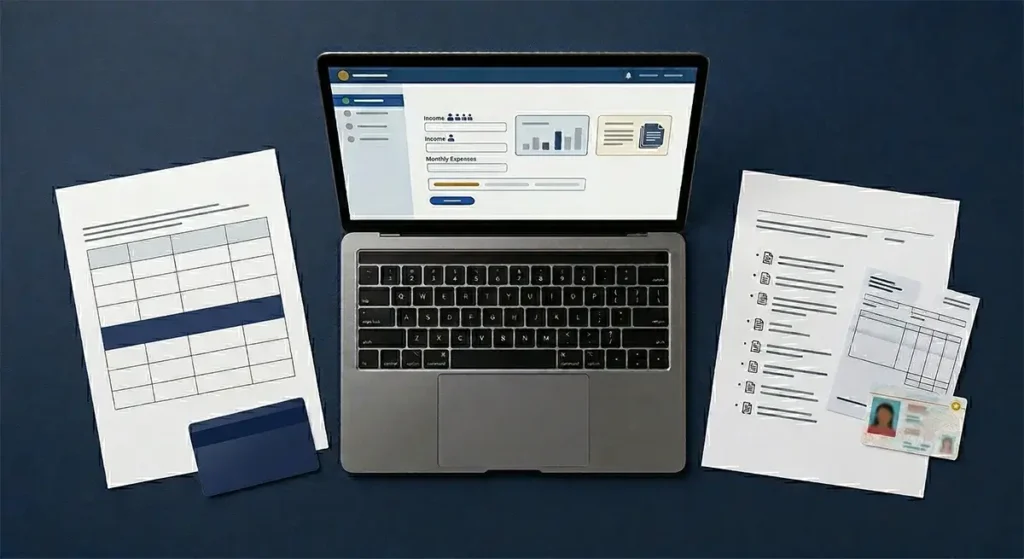
Step 2: Create an account and start the application. You will need to create a secure account on your state’s portal. Gather the following information before you start: names, dates of birth, and Social Security numbers for all household members; proof of identity for the primary applicant (driver’s license, state ID, or passport); proof of address (utility bill, lease agreement, or bank statement showing your address); proof of income for all household members (recent pay stubs, employer contact information, Social Security award letters, or child support documentation); information about housing costs (rent or mortgage amount, utilities paid separately); and bank account information if you have savings accounts to disclose.
Step 3: Complete the application. The online application walks you through questions about household composition, income, expenses, and resources. Answer all questions as accurately and completely as possible — providing false information on a SNAP application is a federal crime. If you are unsure how to answer a question, you can note your uncertainty and clarify during your interview.
Step 4: Submit and schedule your interview. After submitting your application, most states require a brief phone or in-person interview with a SNAP caseworker to verify the information provided. This interview typically takes 15–30 minutes. You will be contacted within a few days of your application to schedule the interview. Prepare your documents — the caseworker may ask for verification of income, identity, or residency.
Step 5: Verify your information. After your interview, you may be asked to submit verification documents. Most states allow document submission by: uploading through the state portal, fax, mail, or in-person delivery to your local SNAP office. Submit requested documents promptly — delays in document submission extend your processing time. Keep copies of everything you submit.
Step 6: Receive your decision and EBT card. Standard SNAP applications are processed within 30 days of receipt. If approved, you will receive an EBT (Electronic Benefits Transfer) card in the mail — a standard-looking payment card that is loaded with your monthly benefit amount. If you requested expedited processing (for households with less than $150 in monthly income and less than $100 in liquid resources) and qualify, benefits can be issued within 7 calendar days. Your first EBT card will arrive within 7–10 business days of approval.
What SNAP Benefits Cover — and What They Do Not
SNAP benefits can be used to purchase: any food or food product intended for human consumption, seeds and plants that produce food, and non-alcoholic beverages. SNAP benefits cannot be used to purchase: alcoholic beverages, tobacco products, vitamins or supplements, hot prepared foods (with limited exceptions for elderly and disabled recipients), and non-food household items (soap, paper products, pet food, household supplies).
SNAP benefits are accepted at any authorized retailer — grocery stores, supercenters (Walmart, Target), most farmers markets (increasingly common as of 2026), and online grocery delivery through Amazon and Walmart. Finding a farmers market that accepts SNAP in your area can also access the SNAP Double Up Food Bucks program in many states — which matches SNAP spending on fresh fruits and vegetables up to $20/month, effectively doubling the purchasing power for produce.
After Approval: Maintaining Your SNAP Benefits
SNAP benefits require periodic recertification — typically every 6 or 12 months depending on your state and household circumstances. You will receive a recertification notice by mail before your certification period expires. Respond promptly — if you miss the recertification deadline, benefits stop and you must reapply from scratch. Report significant income changes (new job, income increase or decrease) within 10 days in most states — failure to report changes that would affect your benefit amount can result in overpayment demands or, in cases of intentional misreporting, program disqualification.



💬 0 Comments