
In April 2025, the United States implemented the most sweeping tariff increases since the Smoot-Hawley Tariff Act of 1930. By early 2026, those tariffs — and retaliatory measures from trading partners — have filtered through global supply chains and landed on American households in ways both visible and hidden. Here is a complete, data-driven breakdown of exactly what tariffs are costing American families.
The Peterson Institute for International Economics estimates that the 2025–2026 US tariff regime costs the average American household approximately $2,800–$3,800 per year in higher prices across goods categories. These costs are not paid to foreign governments — they are paid by American consumers through higher retail prices.
How Tariffs Actually Work: The Economics of Who Pays
A common misconception is that tariffs are paid by foreign countries. They are not. A tariff is a tax collected by US Customs on imported goods at the point of entry. The entity paying the tariff is the US importer — an American company. That company then faces a choice: absorb the cost (reducing profit margin) or pass it on to consumers through higher prices.
Extensive economic research on the 2018–2019 tariffs found that approximately 90–100% of tariff costs were passed through to US consumers and downstream industries, with minimal absorption by foreign exporters. The 2025–2026 tariff regime is significantly larger, making the consumer cost impact proportionally greater.
Category-by-Category Price Impact
| Product Category | Tariff Rate (2026) | Est. Annual Cost Increase Per Household | Impact Mechanism |
|---|---|---|---|
| Consumer electronics | 7.5%–25% | $350–$600 | Direct price increase on imported devices |
| Clothing and apparel | 15%–25% | $200–$400 | Most US apparel manufactured in China, Vietnam, Bangladesh |
| Groceries and food | Variable | $300–$500 | Agricultural input cost increases; imported food products |
| Household appliances | 25%–50% | $150–$300 annualized | Steel, aluminum, and component tariffs raise production costs |
| Furniture and home goods | 25% | $100–$250 | Direct tariffs on Chinese-manufactured furniture |
| Automobiles and auto parts | 25%–27.5% | $200–$500 annualized | Parts tariffs raise vehicle prices; imported vehicle tariffs |
| Toys and sporting goods | 25% | $50–$150 | Majority of US toy sales manufactured in China |
| Construction materials | 25% steel; ongoing lumber duties | $200–$400 | Raises new home construction and renovation costs |
The Hidden Tariff Costs: Inputs You Never See
Beyond direct consumer goods, tariffs on industrial inputs create a cascade of hidden price increases:
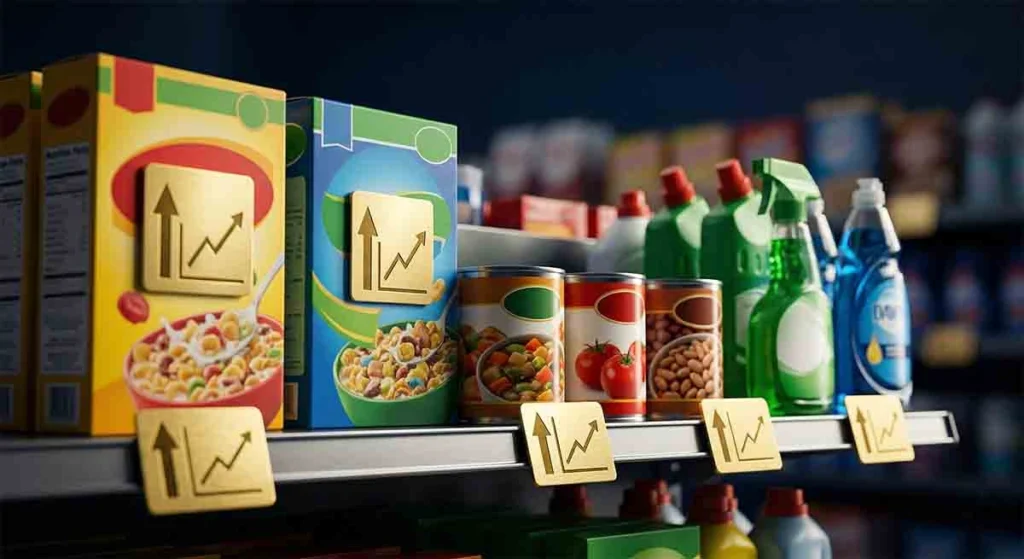
Steel and aluminum tariffs raise the production cost of everything made with metal in the United States — from canned food to cars to kitchen appliances. A can of soup contains approximately $0.02–$0.03 worth of steel. At a 25% steel tariff, that adds fractions of a cent per can — but multiplied across thousands of steel-containing products, the cumulative household impact is real and measurable.
Semiconductor and electronics component tariffs affect not just consumer electronics but every piece of industrial equipment that contains chips — from medical devices to farm equipment to commercial HVAC systems. These costs travel through the supply chain and emerge as higher prices for services and manufactured goods.
Agricultural input tariffs and retaliatory tariffs create dual pressure on food prices. Tariffs on imported fertilizers raise US farmers’ input costs. Retaliatory tariffs from China, the EU, and other trading partners reduce export markets for US agricultural products — lowering farm income and stressing rural regional economies without reducing domestic food prices.
Tariff-Driven Inflation vs Monetary Inflation: Why This Matters for the Fed
Standard demand-driven inflation — too much money chasing too few goods — responds to the Fed’s interest rate tool. Raising rates reduces consumer demand and spending, bringing prices back in line.
Tariff-driven inflation is supply-side cost-push inflation: prices rise because production costs have increased, not because demand is excessive. The Fed’s rate tool is far less effective against cost-push inflation. Raising rates reduces consumer demand — but cannot reduce the tariff costs importers and manufacturers are paying. This creates the 2026 policy dilemma: if the Fed raises rates to fight tariff-inflation, it may trigger a recession without fully solving the inflation problem.
Who Pays the Most: The Regressive Nature of Tariffs
Tariffs are widely considered regressive taxes — lower-income households pay a higher percentage of their income in tariff costs. The reason: lower-income households spend a larger share of their income on physical goods (clothing, food, household items, electronics) than higher-income households, who allocate more income to services (healthcare, financial services, education, travel) that are less directly affected by tariffs on imported goods.
A household earning $40,000/year spending $2,800 in tariff costs is paying 7% of their income in tariff-related price increases. A household earning $200,000/year paying the same $2,800 is paying 1.4%. The absolute dollar impact may be similar — the proportional financial stress on lower-income households is far greater.
What You Can Do to Reduce Your Tariff Cost Burden
For electronics: buy used or refurbished. Pre-tariff inventory circulates in the used electronics market. A refurbished iPhone or laptop from a reputable refurbisher carries zero current tariff burden and typically saves 20–40% versus new. Apple Certified Refurbished, Amazon Renewed, and Back Market are reputable sources with warranty coverage.
For clothing: shift to secondhand and domestic brands. ThredUp, Poshmark, and local thrift stores offer garments manufactured before tariff imposition. Domestic apparel brands with US-sourced inputs carry lower tariff exposure. Reducing clothing purchase frequency directly reduces exposure to tariff-inflated prices.
For groceries: shift toward domestic and local production. Tariffs primarily affect imported food products. Locally grown produce, domestic proteins, and store-brand items with US-sourced ingredients carry lower tariff exposure. Farmers markets and CSA subscriptions are both tariff-hedging and quality-maximizing strategies.
For major purchases: buy existing instead of new. New appliances, vehicles, and electronics carry the full current tariff burden. Used versions purchased before tariff increases, embedded in pricing provide equivalent utility at lower effective cost. The used car, used appliance, and used electronics markets have all improved in quality as more Americans pursue this strategy.



💬 0 Comments