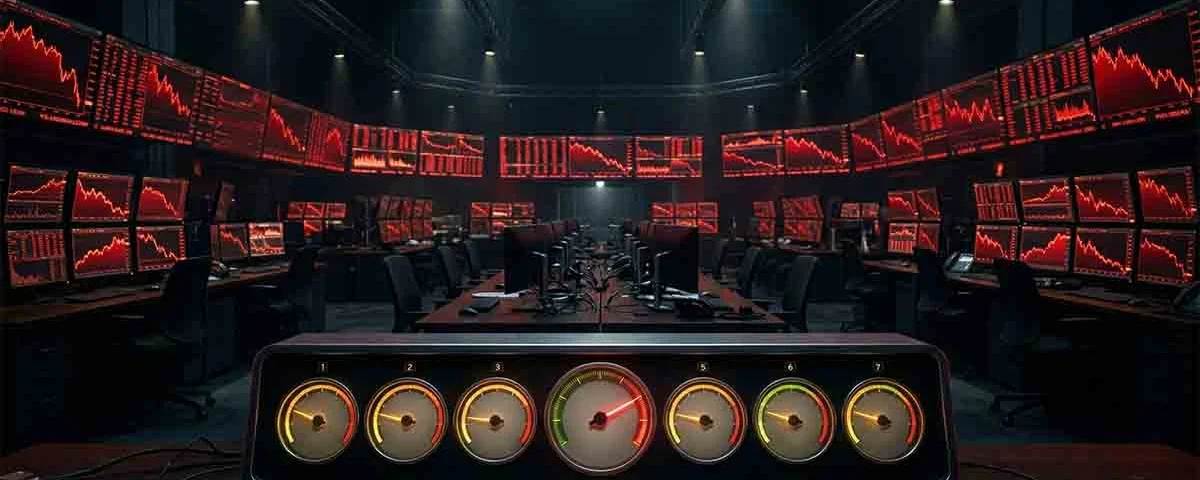
Recessions rarely arrive without warning. In nearly every documented US recession since World War II, a recognizable pattern of leading economic indicators shifted months before the official downturn began. These indicators function as the economy’s early warning system — and in 2026, with recession probability elevated by tariff uncertainty, geopolitical conflict, and softening labor market data, monitoring them is not just an academic exercise but a practical financial planning necessity. Understanding what these signals mean, where to find the data, and how to interpret them empowers you to take proactive steps — building emergency funds, reducing debt, positioning your career — before the downturn arrives rather than reacting to it after the fact.
Of these 7 leading recession indicators, at least 3 to 4 are flashing caution in early 2026. This does not guarantee a recession will occur, but it places the current economic environment in the elevated-risk category that warrants active financial preparation. The strongest individual signal — the yield curve — has preceded every US recession since 1970 with no false positives.
1. Yield Curve Inversion
The yield curve — specifically the spread between the 10-year and 2-year US Treasury yields — is widely regarded as the single most reliable recession predictor in existence. Under normal conditions, long-term bonds pay higher interest rates than short-term bonds because investors demand compensation for tying up their money for a longer period. When this relationship inverts — when 2-year yields exceed 10-year yields — it signals that bond market participants expect economic conditions to deteriorate significantly, causing the Federal Reserve to cut short-term rates in the future.
The yield curve has inverted before every US recession since 1970, with a lead time of approximately 12 to 18 months and no false positives. The current cycle’s yield curve inverted sharply in 2022 and 2023, reaching its deepest inversion in over 40 years, before beginning to normalize in late 2024 and early 2025. Historically, the recession typically begins after the curve normalizes — not during the inversion itself — which places the current period squarely within the historical danger zone.
You can monitor the yield curve daily using the Federal Reserve Bank of St. Louis FRED portal (fred.stlouisfed.org/series/T10Y2Y) or the US Department of the Treasury’s Daily Treasury Yield Curve Rates page (treasury.gov/resource-center/data-chart-center/interest-rates). Status in early 2026: Watch closely — the curve has recently normalized from deep inversion, which historically precedes recession onset.
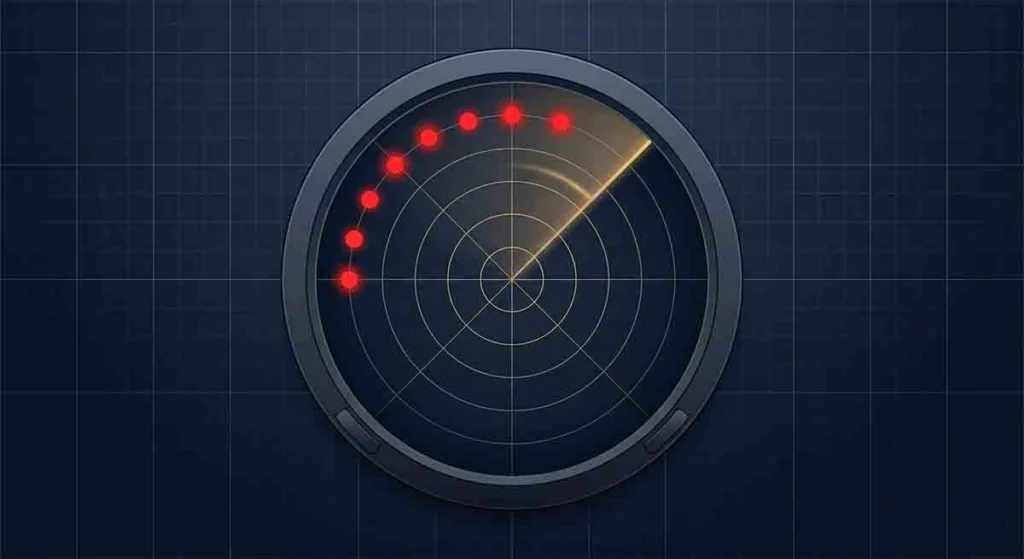
2. Rising Initial Unemployment Claims
Weekly initial jobless claims, published every Thursday morning by the Department of Labor’s Employment and Training Administration, are the most timely indicator of labor market deterioration available to the public. Each weekly report measures the number of Americans filing for unemployment benefits for the first time, providing a near-real-time signal of when businesses begin cutting payroll.
During healthy economic expansions, weekly initial claims typically run between 200,000 and 250,000. When claims begin rising persistently — sustained increases of 20 to 30 percent over several weeks — it signals that layoffs are accelerating across the economy. During the 2008-2009 recession, initial claims rose from approximately 300,000 per week to over 665,000 per week at the peak. During the COVID-19 recession, initial claims exploded to a historically unprecedented 6.9 million in a single week.
The key is to watch the trend, not individual weekly readings which can be distorted by seasonal factors, holidays, and natural disasters. The 4-week moving average smooths out this noise. You can access the data at the Department of Labor’s Employment and Training Administration (dol.gov/ui/data.pdf) or through the FRED portal. Status in early 2026: Slightly elevated and worth monitoring closely for sustained upward movement.
3. Consumer Confidence Declining
Consumer spending accounts for approximately 70 percent of US GDP, making consumer sentiment a critical leading indicator. When consumers lose confidence in the economy — when they begin to fear for their jobs, worry about rising prices, or feel uncertain about their financial futures — they reduce discretionary spending, which directly slows economic growth and can trigger the very recession they fear.
Two primary surveys track consumer sentiment: the Conference Board Consumer Confidence Index (published monthly) and the University of Michigan Consumer Sentiment Index (published monthly with a preliminary and final reading). Both surveys ask Americans about their current financial conditions and their expectations for the economy over the next 6 to 12 months. Sharp declines in the expectations component are particularly significant as a recession indicator.
The Conference Board’s Consumer Confidence Index fell sharply in early 2025 and has remained below pre-pandemic averages through early 2026, reflecting consumer anxiety about tariff-driven price increases, geopolitical uncertainty, and labor market softening. You can find the data via the Conference Board’s website (conference-board.org) or through FRED (fred.stlouisfed.org). Status in early 2026: Warning — consumer confidence has been declining for several consecutive months.
4. Manufacturing PMI Below 50
The Institute for Supply Management (ISM) Manufacturing Purchasing Managers’ Index (PMI) is a monthly survey of manufacturing sector purchasing managers that measures whether the sector is expanding or contracting. A reading above 50 indicates expansion; below 50 indicates contraction. Manufacturing is a cyclically sensitive sector that tends to contract before the broader economy, making the PMI a useful leading indicator.
The ISM Manufacturing PMI has spent a significant portion of 2025 and early 2026 in contraction territory (below 50), reflecting reduced demand for manufactured goods, tariff-related supply chain disruptions, and uncertainty about future orders. While manufacturing represents a smaller share of the US economy than it once did (approximately 11 percent of GDP compared to 28 percent in 1953), persistent manufacturing contraction still signals broader economic weakness because manufacturing output affects supply chains, employment, and business investment across many other sectors.
The ISM releases the Manufacturing PMI on the first business day of each month (ismworld.org). Status in early 2026: Warning — the PMI has been below 50 for 6 or more consecutive months in the current cycle.
5. Housing Starts Declining
Residential construction is one of the most interest-rate-sensitive sectors of the economy, and housing starts (new residential construction projects begun) have historically served as a leading indicator with a 12 to 18 month lead time before recessions. When mortgage rates rise and affordability declines, builders pull back on new construction, which reduces employment in construction and related industries (lumber, concrete, appliances, furnishings) and signals broader economic cooling.
The US Census Bureau and the Department of Housing and Urban Development jointly publish the monthly New Residential Construction report (census.gov/construction/nrc), which tracks housing starts, building permits (an even earlier indicator), and housing completions. A sustained decline in housing starts and building permits below their 12-month moving average is a meaningful recession warning signal.
Housing affordability in 2026 remains challenging due to elevated mortgage rates and persistent home price appreciation in many markets. The National Association of Realtors’ Housing Affordability Index tracks the relationship between median household income, median home prices, and prevailing mortgage rates. Status in early 2026: Caution — housing starts have moderated from post-pandemic peaks but have not collapsed.
6. Corporate Credit Spreads Widening
Credit spreads measure the difference in yield between corporate bonds and risk-free Treasury bonds of the same maturity. When investors become worried about the economy, they demand higher yields to compensate for the increased risk of corporate default — widening the spread. A rapid widening of credit spreads, particularly in high-yield (junk) bonds, signals that financial markets are pricing in elevated recession risk.
The ICE BofA US High Yield Option-Adjusted Spread, available through FRED (fred.stlouisfed.org/series/BAMLH0A0HYM2), is the most widely monitored credit spread indicator. During the 2008 financial crisis, this spread widened from approximately 3 percentage points to over 20 percentage points. During the 2020 COVID recession, it widened from approximately 3.5 to over 10 percentage points within weeks. Rapid widening above 5 to 6 percentage points is generally considered a significant recession warning signal. Status in early 2026: Moderately elevated and sensitive to geopolitical developments.
7. Oil Price Shocks
The Federal Reserve has observed that “nearly all post-World War II recessions in the United States were preceded by, or accompanied by, a sharp increase in energy prices relative to the aggregate price level.” Oil price spikes function as a tax on consumers and businesses — they increase the cost of transportation, manufacturing, heating, and virtually every supply chain, reducing the disposable income available for other spending and investment.
In 2026, oil prices have been elevated by the geopolitical conflict involving Iran and disruptions to shipping through the Strait of Hormuz, through which approximately 20 percent of the world’s oil supply transits daily. Brent crude prices have fluctuated significantly, at times approaching levels not seen since the 2022 energy crisis. The Energy Information Administration (eia.gov) provides daily oil price data and weekly petroleum status reports.
While the United States is in a stronger position to absorb oil shocks than in previous decades — the US became a net petroleum exporter in 2018 — sustained oil prices above $100 per barrel still represent a meaningful drag on consumer purchasing power and business operating costs, particularly for transportation-dependent industries. Status in early 2026: Active concern — oil prices remain elevated and volatile due to ongoing geopolitical risk.
What Should You Do With This Information?
These indicators are not crystal balls — they identify elevated probability, not certainty. The appropriate response to 3 to 4 warning indicators flashing is not panic but preparation. Build or replenish your emergency fund to cover at least 6 months of essential expenses. Pay down high-interest consumer debt, particularly credit cards. Review your job security honestly and update your resume. Avoid taking on new non-essential debt (car loans for luxury vehicles, home equity lines for renovations, personal loans for discretionary spending). Continue investing in retirement accounts but ensure your asset allocation reflects your risk tolerance and time horizon. Consult a certified financial planner if your financial situation is complex (investor.gov provides a tool to verify financial advisor credentials).
The Americans who navigate recessions most successfully are not those who predict the exact timing of the downturn but those who are financially prepared whenever it arrives.

💬 0 Comments