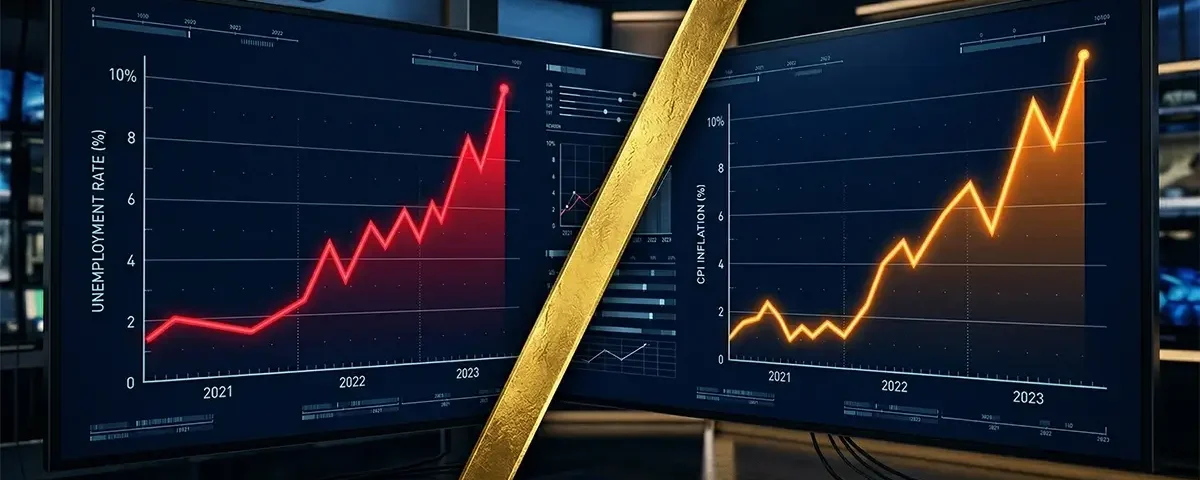
Stagflation is back in the American economic conversation for the first time since the 1970s — and for most Americans under 60, it is a completely unfamiliar economic condition. Unlike a standard recession, where falling prices and rising unemployment travel together, stagflation combines the worst elements of two different economic problems: the stagnant growth and unemployment of a recession with the rising prices and cost pressures of inflation.
Stagflation is the simultaneous combination of high inflation, slow or negative economic growth, and high unemployment. It is the Federal Reserve’s most difficult policy environment because the standard tools for fighting recession (rate cuts) worsen inflation, while the standard tools for fighting inflation (rate hikes) worsen the recession. The financial preparation strategies are different from both standard recession and standard inflation preparation.
What Is Stagflation? The Economic Definition
The term “stagflation” combines “stagnation” and “inflation” — coined by British politician Iain Macleod in 1965. In conventional economic theory, inflation and unemployment were believed to move in opposite directions — described by the Phillips Curve. High unemployment (recession) would produce low inflation; low unemployment (boom) would produce high inflation. The 1970s destroyed this theoretical comfort: a combination of supply shocks (most famously the 1973 OPEC oil embargo), expansionary monetary policy, and structural economic shifts produced an environment where unemployment, inflation, and economic stagnation coexisted simultaneously.
The Misery Index: Quantifying the Dual Burden
| Period | Unemployment Rate | Inflation Rate | Misery Index | Assessment |
|---|---|---|---|---|
| 1973 (Pre-Oil Shock) | 4.9% | 6.2% | 11.1 | Uncomfortable but manageable |
| 1980 (Peak Stagflation) | 7.1% | 13.5% | 20.6 | Severe — worst post-war economic conditions |
| 2009 (Great Recession) | 9.9% | 2.7% | 12.6 | High unemployment, low inflation — classic recession |
| 2022 (Post-COVID Inflation) | 3.5% | 8.0% | 11.5 | High inflation, low unemployment — unusual |
| Early 2026 (Current) | ~4.5% | ~3.5% | ~8.0 | Elevated — stagflation risk present but below 1970s severity |
How 2026 Differs from the 1970s
The 2026 environment is not full 1970s-style stagflation. Three key differences: First, the inflation source is different — 2026 inflation is primarily tariff-driven cost-push inflation (prices rising because of government-imposed costs on imports), not wage-price spirals or deeply embedded inflation expectations as in the 1970s. Second, the Federal Reserve’s credibility is different — after the Volcker shock of 1980–1982 established the Fed as willing to do whatever was necessary to control inflation, current inflation expectations are better anchored. Third, the energy situation is different — the US is now the world’s largest oil and gas producer, dramatically reducing vulnerability to OPEC-style supply shocks.
What Stagflation Does to Your Finances
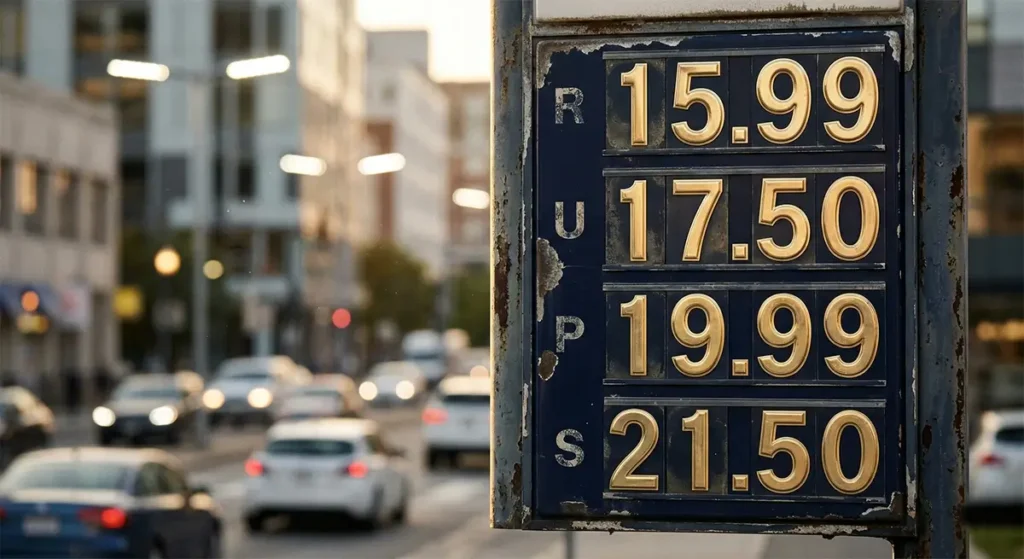
Your real wages fall — if your salary increases by 3% but inflation runs at 4%, your real purchasing power has declined by 1%. Fixed-rate debt becomes easier to service in real terms — a mortgage at $1,500/month fixed becomes relatively cheaper as inflation runs. Variable-rate debt becomes more expensive — in stagflation, the Fed typically maintains elevated interest rates to fight inflation, keeping credit card APRs, HELOC rates, and ARM rates high. Cash savings are eroded — dollars in checking accounts earning below the inflation rate are losing purchasing power every month.
How to Protect Your Finances Against Stagflation
Lock in fixed-rate debt where possible. Refinance any adjustable-rate mortgage to a fixed-rate mortgage if you have the equity and credit quality. In a stagflationary environment, knowing your debt costs are fixed while your income (eventually) rises with inflation is a structural advantage. Invest in Treasury Inflation-Protected Securities (TIPS). TIPS are US government bonds whose principal value adjusts with the CPI — providing a guaranteed real return. Available at TreasuryDirect.gov (I-bonds) and through ETFs. Own real assets. Physical real estate, commodities, infrastructure, and commodity-producing companies historically outperform financial assets during inflationary periods. Invest in your own earning power. Professional development, skills in short supply, and certifications that command premium wages are the most inflation-resistant asset any person owns. Reduce fixed living expenses aggressively. Households with the lowest fixed expense ratios — smallest required monthly outlays relative to income — navigate stagflation most successfully.



💬 0 Comments