
When financial hardship arrives — whether from job loss, medical crisis, recession, or unexpected expenses — the psychological instinct is often to handle it alone. This instinct costs American families billions of dollars each year in benefits and programs they qualified for but never claimed. This guide maps every major government resource available to Americans facing financial hardship in 2026.
The federal government and state agencies operate dozens of financial assistance programs that most Americans know nothing about until they desperately need them. Collectively, these programs provided over $1.2 trillion in benefits to American households in fiscal year 2025. You have contributed to these programs through your taxes throughout your working life. Claiming them during hardship is the system working exactly as intended.
SNAP: Food Assistance
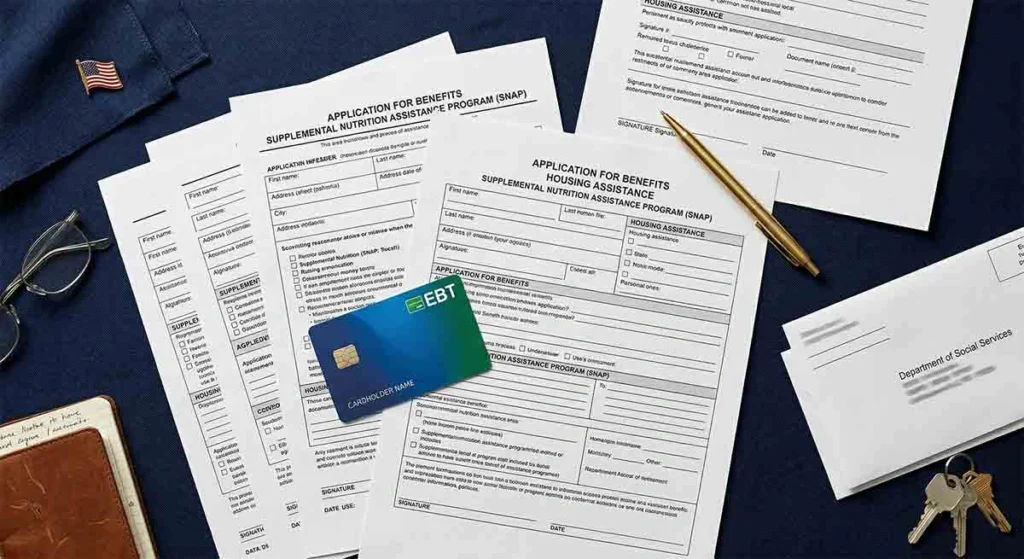
SNAP serves approximately 42 million Americans monthly. Benefits load onto an EBT card usable at any authorized grocery store, most farmers markets, and select online retailers including Amazon and Walmart.
2026 eligibility: Gross monthly income at or below 130% of the federal poverty level — approximately $3,900/month for a family of four ($46,800/year). Maximum monthly benefits: 1 person — $292; 2 people — $536; 3 people — $768; 4 people — $975.
Apply: Visit your state’s SNAP agency website or call 211. Most states allow online applications. Expedited processing (within 7 days) is available for households with less than $150 in monthly income.
Medicaid: Free or Low-Cost Health Coverage
Under ACA Medicaid expansion (adopted by 41 states), Medicaid covers adults with incomes up to 138% of the federal poverty level — approximately $20,120 for an individual or $41,400 for a family of four in 2026. If you lost employer-sponsored insurance due to recession-related job loss, you may qualify for Medicaid even if you previously had private coverage. Apply through Healthcare.gov or your state’s Medicaid agency year-round.
CHIP: Children’s Health Insurance
CHIP covers children in families with incomes too high for Medicaid but unable to afford private insurance — typically up to 200–300% of the federal poverty level ($62,400–$93,600 for a family of four in 2026). Most states charge no premiums and very low or no copayments. Apply at InsureKidsNow.gov.
Unemployment Insurance
UI replaces approximately 40–50% of pre-layoff wages for up to 26 weeks. National average weekly benefit: approximately $475. Maximum benefits range from $235/week (Mississippi) to $1,050+/week (Massachusetts). File immediately upon job loss — benefits are backdated to your filing date only if you file promptly. Every week you delay is a week of benefits you cannot recover.
LIHEAP: Energy Bill Assistance
The Low Income Home Energy Assistance Program provides federal grants of $300–$1,000/year to qualifying households for heating and cooling bills. Income limit: typically 60% of state median income or 150% of the federal poverty level. Apply early in the program year — most states begin new program year enrollment in the fall and benefits run out before all eligible households are served. Find your state’s administrator at acf.hhs.gov/ocs/programs/liheap.
Housing Assistance
Emergency Rental Assistance (ERA): Most states and many localities maintain ERA programs for households facing eviction due to economic hardship. Contact your local 211 or your city/county housing authority website to find current ERA availability.
Section 8 Housing Choice Voucher: Provides ongoing rental subsidies limiting housing costs to 30% of income. Waiting lists are typically 1–5+ years. Apply as soon as possible — your circumstances may change by the time you reach the top of the list.
Homeowner Assistance Fund (HAF): State programs providing grants to qualifying homeowners facing mortgage delinquency, property tax delinquency, or utility arrears due to economic hardship. Check your state’s housing finance agency website for current program availability and funding levels.
WIC: Nutrition for Women, Infants, and Children
WIC provides monthly food benefits for pregnant women, new mothers, infants, and children under 5. Income limit: 185% of the federal poverty level ($53,475 for a family of four in 2026). WIC is separate from SNAP and can be received simultaneously. Find your local WIC clinic at wic.fns.usda.gov/wic-clinic-finder.
Medicare Extra Help / Low-Income Subsidy
For Medicare beneficiaries with limited income and resources, the Extra Help program reduces Medicare Part D prescription drug costs to near zero — monthly premium, annual deductible, and copayments all reduced or eliminated. Income limit: approximately $22,000 for individuals and $29,520 for married couples in 2026. Apply at SSA.gov or through your state’s SHIP counselor.
Social Security Disability Insurance (SSDI) and SSI
SSDI provides monthly income to workers who become disabled and can no longer work, based on prior Social Security contributions. Average 2026 benefit: approximately $1,580/month. There is a 5-month waiting period from disability onset. SSI provides $967/month maximum for disabled individuals with very limited income and resources, regardless of work history. Apply at SSA.gov or your local Social Security office.
Student Loan Protections
Federal student loan borrowers experiencing income reduction can access Income-Driven Repayment plans (SAVE, IBR, PAYE, ICR) capping monthly payments at 5–20% of discretionary income. If income drops to zero, payments drop to zero. Enroll or recertify at StudentAid.gov. Economic hardship deferment and unemployment deferment are also available through your loan servicer.
Find All Benefits You Qualify For
Benefits.gov — the official federal benefits portal — allows you to complete a brief questionnaire and receive a customized list of all federal programs you may qualify for based on household size, income, age, and other factors. The 211 helpline (call or text “211”) connects you to a local specialist who can identify state and local assistance programs in addition to federal ones — including emergency food pantries, utility assistance, emergency rental help, and community resources.



💬 0 Comments